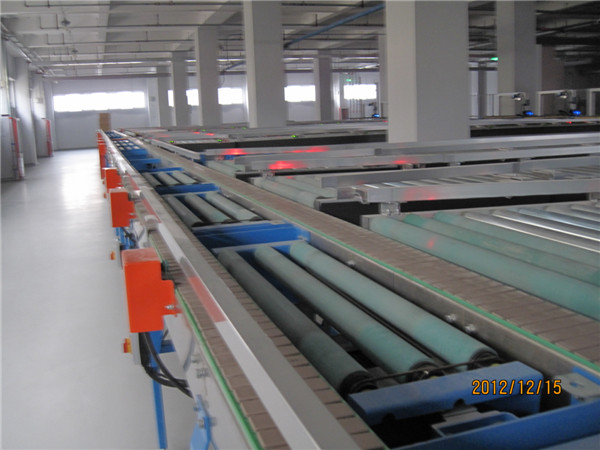
An automatic sorting machine typically consists of a control unit, sorting mechanism, conveyor system, and sorting gates. The control unit identifies, receives, and processes sorting signals, directs the sorting equipment according to these signals, and automatically classifies goods based on product type, destination, or cargo category. These sorting requirements can be fulfilled through various methods, such as barcode scanning, color code scanning, keyboard input, weight detection, voice recognition, height detection, and shape recognition. The signals are transmitted to the sorting control system, which determines which sorting gate a particular item should enter based on its interpretation of these sorting signals.
What are the characteristics of automatic parcel sorters? What are the common types? Many unfamiliar with automatic sorters are unclear about their features and types, and are curious. However, with continuous technological advancement, numerous sorter types now exist, yet many remain unaware of their classifications. To facilitate understanding, the following details the characteristics and primary common types of automatic sorters.
1. Continuous, high-volume sorting capability. Utilizing automated assembly line methods for mass production, automatic sorting systems operate continuously without constraints from weather, time, or human physical limitations. Simultaneously, because the system processes a large volume of items per unit time, its sorting capacity can sustain continuous operation for over 100 hours, handling up to 7,000 packages per hour. Manual sorting, by contrast, can only process approximately 150 items per hour, and under such labor intensity, sorting personnel cannot work continuously for 8 hours.
2. The sorting error rate is extremely low. The accuracy of an automated sorting system primarily depends on the precision of input sorting information, which in turn relies on the input mechanism. Manual keyboard or voice recognition input methods yield error rates exceeding 3%. Barcode scanning input, however, produces no errors unless the barcode itself is misprinted. Consequently, current automated sorting systems predominantly utilize barcode technology for cargo identification.
3. Sorting operations are largely unmanned. One objective of establishing automated parcel sorting systems abroad is to reduce personnel usage, alleviate workers' labor intensity, and enhance operational efficiency. Consequently, fully automated sorters minimize personnel requirements, achieving near-unmanned operation.